Why I’m Never Hungry in Japan
Why I’m Never Hungry in Japan
(And the Fat Loss Lesson Hidden Inside)
Lately, I’ve noticed something odd.
I’m almost never hungry in Japan.
And no—it’s not some magical metabolism switch. It’s mostly down to miso soup and yasai (野菜), the Japanese word for vegetables… which I’ve been eating an insane amount of recently.
Not that I didn’t eat vegetables before—I did. But this was different. This was next level.
Why? Because I wasn’t in charge of my own meals.
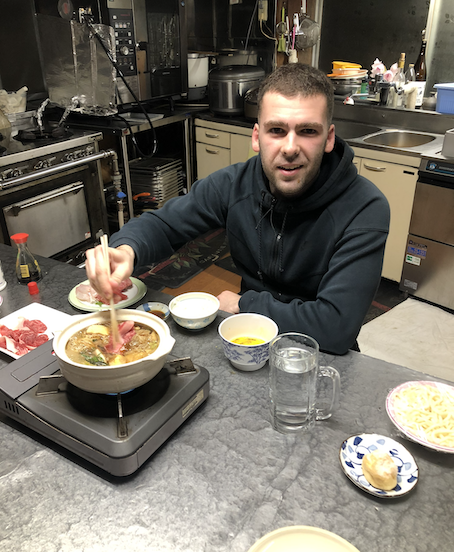
For a period of time, I stayed at an Airbnb in a small Japanese town called Komoro, in the Nagano prefecture. The host was a chef, and every meal was traditional Japanese food—meaning each plate was absolutely ram-packed with vegetables.
Every meal also came with a bowl of miso soup. And if you’ve never tried proper miso soup before, I’d genuinely give it a 10/10 recommendation.
But the thing that stood out most? I was certain I was eating fewer calories than I normally would… yet I felt fuller than I had in a very long time.
Which brings me to a classic fat loss principle. Low calorie density foods.
In simple terms, foods that allow you to eat more volume for fewer calories.
My experience in Japan was a perfect real-life example of this. If you can eat more food while consuming fewer calories, you stay fuller for longer. And when you’re fuller for longer, fat loss becomes far easier to stick to.
See where this is going? Instead of constantly feeling hungry and food-focused—like most people do when they start a fat loss phase—you begin to realise that the process doesn’t actually need to feel that hard.
Here’s a simple comparison: Roughly 100 calories of chocolate is about two squares of Toblerone. 100 calories of watermelon? Around 335 grams.
Same calories. Very different fullness. The larger portion wins every time.
The chef’s cooking in Komoro was another reminder of why Japan has one of the lowest obesity rates in the world. Not because people are consciously dieting—but because low calorie density foods are simply normal here.
There’s even research supporting this. Studies on residents of Okinawa—an island south of mainland Japan—have looked into how diet contributes to their exceptional longevity. Unsurprisingly, diets rich in vegetables, fruit, and protein play a meaningful role.
So if fat loss is the goal, prioritise foods that are low in calorie density: vegetables, miso soup, fruit (especially berries and watermelon), and lean meats or fish.
But—and this matters—if you’ve eaten well all day and have 100 calories left for a treat?
Have the two squares of Toblerone. Enjoy them. No guilt required.
Fat loss isn’t about suffering. It’s about making the process easier to live with.
If you want similar-style thoughts shared with you weekly, you can sign up by clicking here—it’s completely free.
Speak soon,
Leo